FROM OUR BLOG
How Time-Based Cost Allocation Works: From Hours to Accurate Grant Reporting

Month-end close shouldn't require a degree in forensic accounting. Yet many nonprofit finance teams find themselves buried in spreadsheets, trying to figure out how much of Sarah's salary should hit the education grant versus the housing program. The math gets complex fast when one employee works across multiple funding sources.
Time-based cost allocation solves this puzzle by using actual work hours as the foundation for distributing payroll costs. Rather than guessing or using arbitrary percentages, this method tracks where employees spend their time and applies those percentages to all related costs.
The Foundation: Employee Time Data
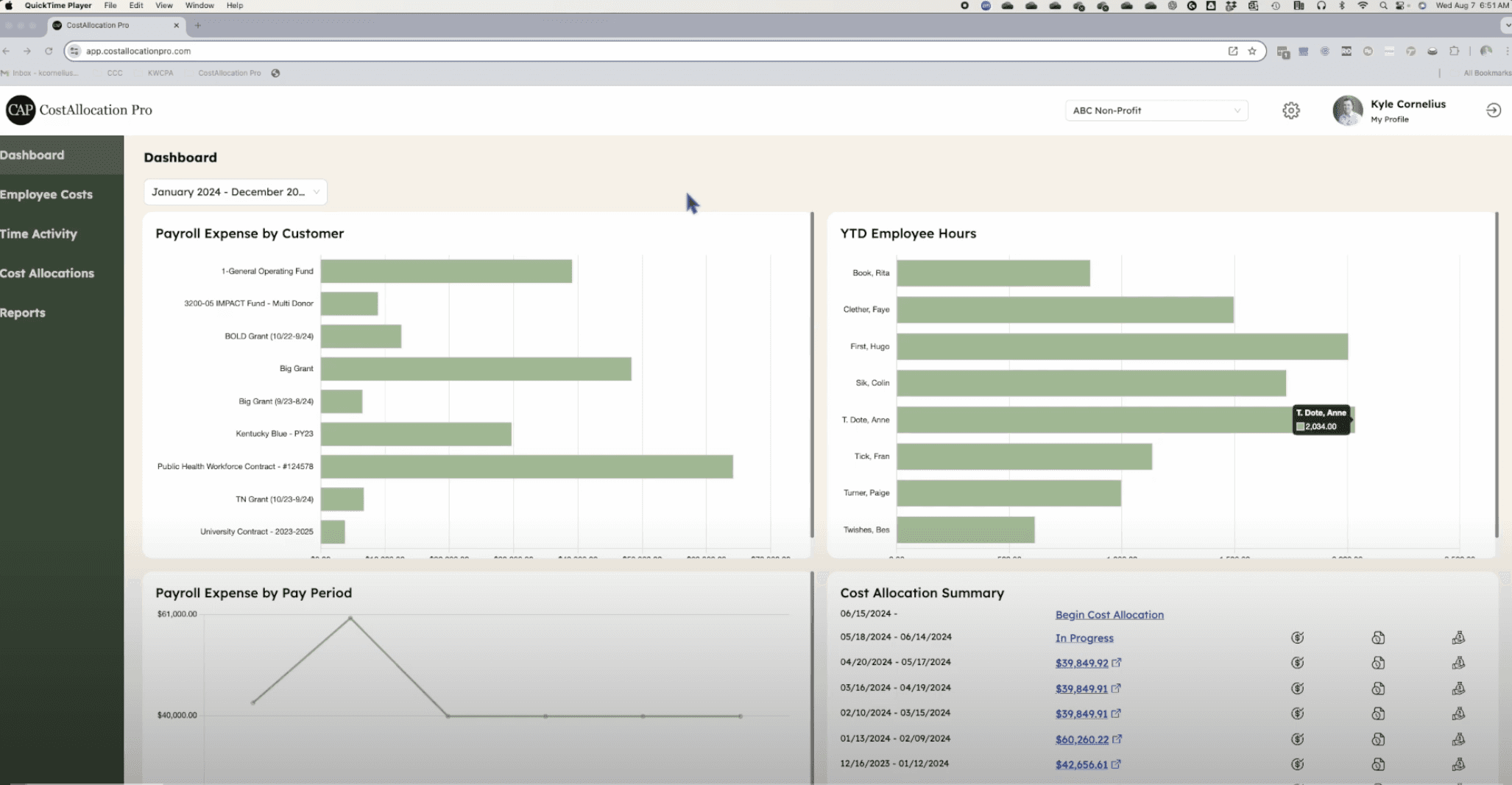
Time-based allocation starts with capturing how employees divide their work hours across different programs, grants, or cost centers. This data can come from QuickBooks Online timesheets or external time tracking systems.
Once you have the time data, the calculation becomes straightforward. If John worked 30 hours on Grant A and 10 hours on Grant B during a pay period, then 75% of his payroll costs (salary, benefits, payroll taxes) get allocated to Grant A, and 25% goes to Grant B.
This proportional approach ensures that costs follow actual work performed, not estimates or assumptions. For organizations managing multiple grants with different compliance requirements, this accuracy becomes critical during audits and financial reporting.
Beyond Just Salaries: Comprehensive Cost Distribution
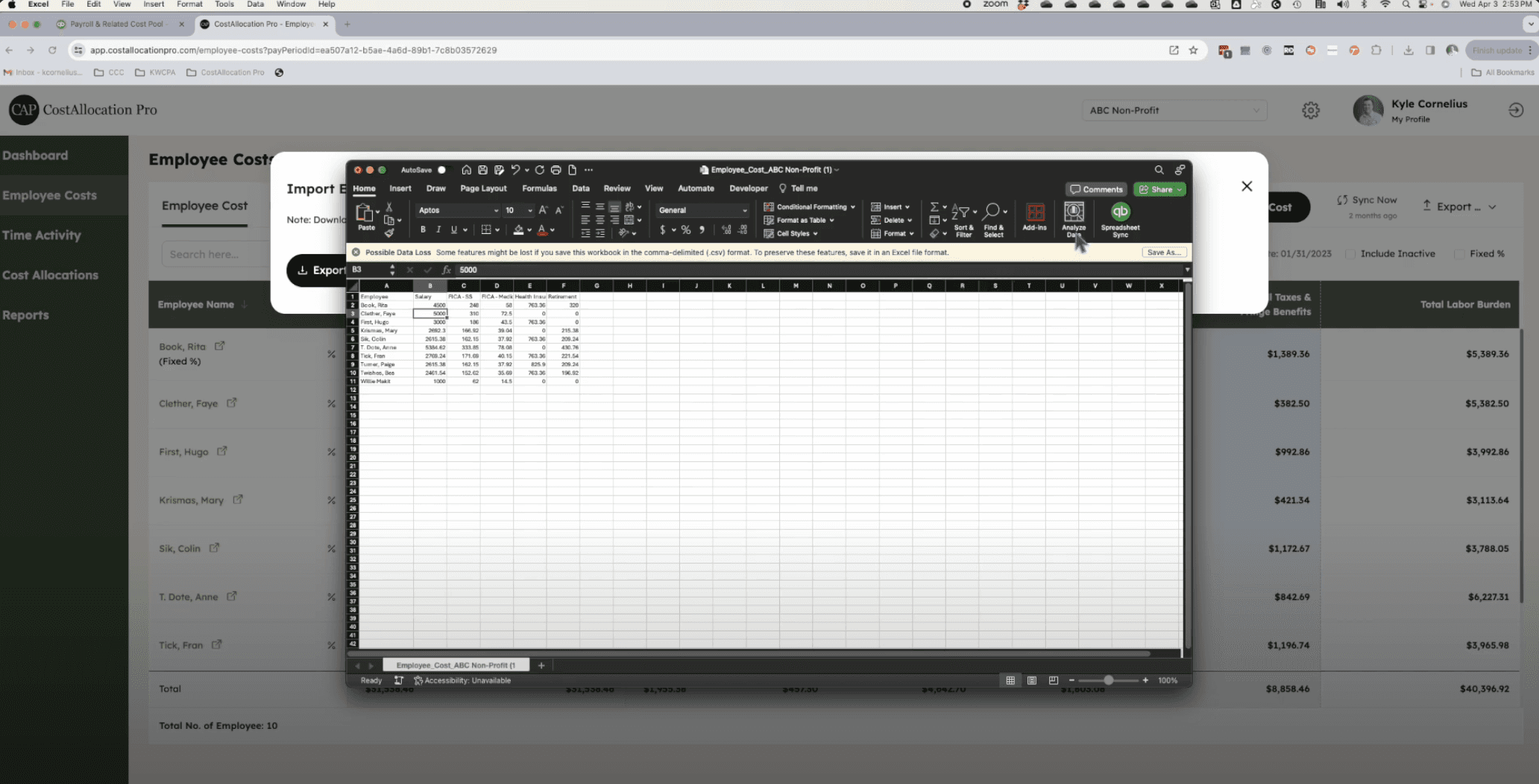
While salary allocation might seem straightforward, time-based systems extend this logic to all employee-related expenses. Payroll taxes, health insurance premiums, retirement contributions, and other fringe benefits get distributed using the same time percentages.
This comprehensive approach prevents the common problem of under-allocating true program costs. When a grant reimburses at actual cost, leaving out fringe benefits or payroll taxes means losing legitimate reimbursement dollars. Time-based allocation captures the full cost picture.
The method also handles complex scenarios, like when an employee's time spans multiple months or when pay periods don't align perfectly with reporting periods. The system calculates percentages based on the specific timeframe and applies them consistently across all cost categories.
Compliance and Audit Benefits
Federal regulations like 2 CFR 200 require that costs be allocable, reasonable, and consistently applied. Time-based allocation meets these requirements by creating a clear audit trail from timesheets to financial reports.
Auditors can easily verify that the Executive Director's salary allocation to various programs matches their actual time distribution. This transparency reduces audit risk and demonstrates compliance with federal cost principles.
The consistency requirement is particularly important. Once you establish time-based allocation as your method, it must be applied uniformly across all programs and time periods. This prevents the appearance of manipulating allocations to favor certain funding sources.
Practical Implementation Considerations
Successful time-based allocation requires accurate time tracking as the starting point. Employees need clear guidance on coding their time to the correct programs or grants. Generic categories like "administrative" or "program work" won't provide the detail needed for proper allocation.
Timing also matters. Monthly allocation cycles typically work well for most organizations, allowing enough time for employees to submit accurate timesheets while keeping allocations current for financial reporting.
Some organizations worry about the administrative burden of detailed time tracking. However, the alternative—manual allocation calculations and spreadsheet management—often requires more total effort and introduces significant error risk.
Making It Work for Your Organization
Time-based cost allocation transforms hour-by-hour work data into accurate financial reporting. For nonprofits and government contractors dealing with multiple funding sources, this method provides the precision and audit trail that compliance requires.
The key is starting with reliable time data and letting the mathematics handle the complex distribution calculations. When implemented properly, time-based allocation eliminates guesswork and provides confidence that costs are properly attributed to their funding sources.