FROM OUR BLOG
What Is Cost Allocation and Why Nonprofits Need It for Grant Compliance

Your auditor just asked for detailed documentation of how administrative costs were distributed across grants. You realize that your current method—spreading overhead based on rough estimates in a monthly spreadsheet—won't pass scrutiny. Sound familiar? Cost allocation challenges affect nearly every nonprofit managing multiple funding sources, yet many organizations still rely on manual processes that create compliance risk and consume valuable staff time.
Cost allocation is the systematic process of distributing shared expenses across different programs, grants, or funding sources based on a documented methodology. Rather than arbitrarily assigning costs, proper allocation ensures that each funding source bears its fair share of both direct and indirect expenses.
## Why Cost Allocation Matters for Nonprofit Financial Management
Federal regulations under 2 CFR 200 (Uniform Guidance) require nonprofits to allocate costs in a manner that reflects the actual benefit received by each program or grant. This isn't merely a compliance checkbox—it's fundamental to accurate financial reporting and sustainable operations.
When administrative salaries, rent, utilities, and other shared costs aren't properly allocated, several problems emerge. Grant reports may understate the true cost of program delivery, making it difficult to secure adequate future funding. Indirect cost rates submitted to federal agencies may be inaccurate, affecting your organization's ability to recover overhead expenses. During audits, questioned costs can result in funding clawbacks that threaten financial stability.
Proper cost allocation also provides management with clearer visibility into program profitability and resource utilization. Finance teams can identify which programs are operating efficiently and which may need additional support or restructuring.
## Common Allocation Methods and When to Use Them
Most nonprofits use one of several standard allocation bases, depending on the nature of their operations and the types of costs being distributed.
Time-based allocation remains the most defensible method for personnel costs. When employees track hours worked on specific grants or programs, payroll expenses can be allocated based on actual time spent. This approach works particularly well for organizations where staff members split time across multiple funding sources.
For administrative and facility costs that can't be directly tied to employee time, organizations often use direct salary allocation as the base. Under this method, indirect costs are distributed proportionally based on the direct salary dollars already allocated to each program. If Program A received 30% of direct salary costs, it would also receive 30% of administrative expenses.
Some organizations prefer cost center or department-based allocation, particularly when certain administrative functions primarily support specific programs. The development office might allocate most of its costs to fundraising, while program-specific managers might allocate entirely to their respective areas.
## Technology Solutions for Automated Cost Allocation
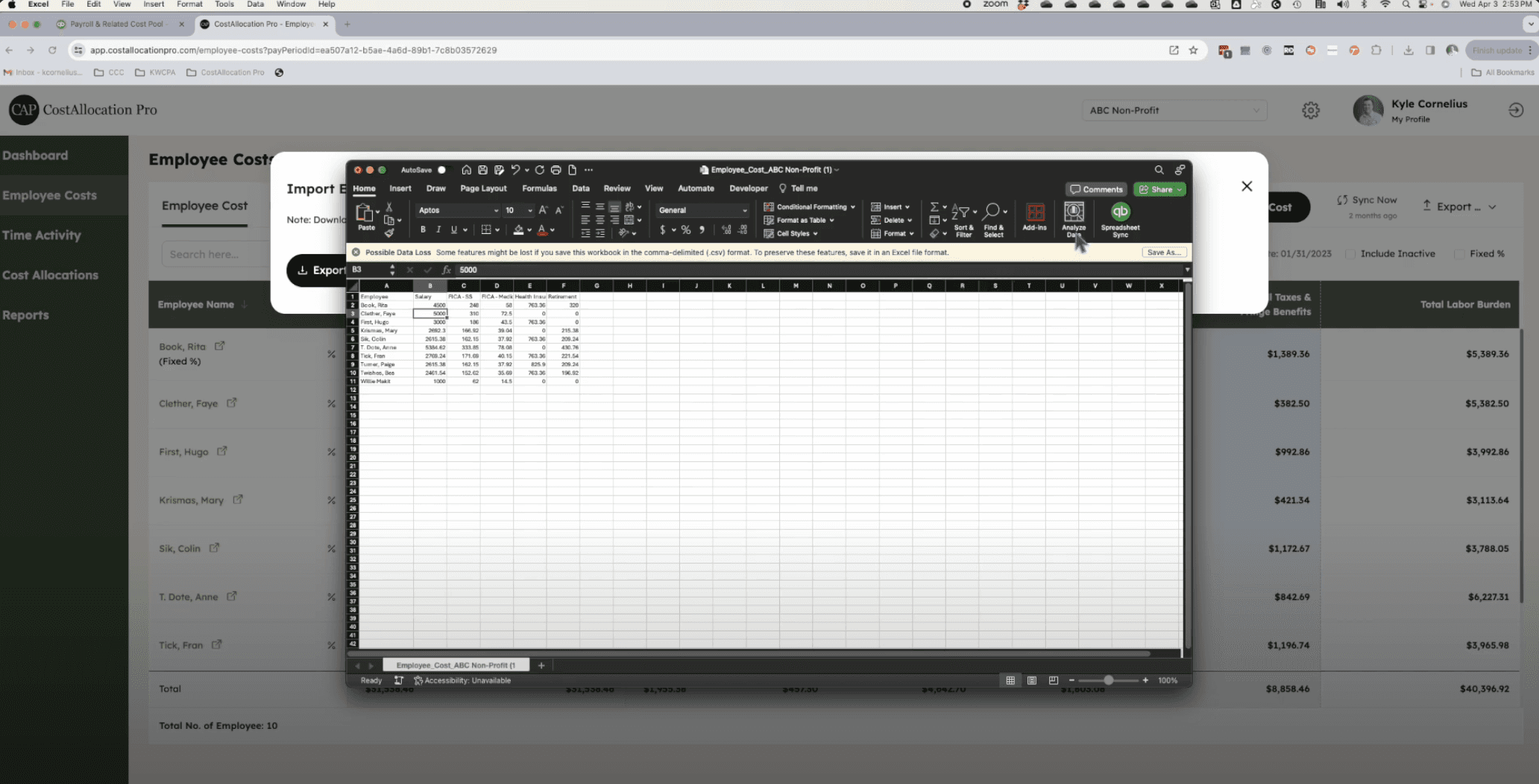
Manual allocation processes create several operational challenges that technology can address effectively. Spreadsheet-based methods are time-intensive, error-prone, and difficult to audit. Each month-end close becomes a lengthy process of gathering data, updating formulas, and preparing journal entries.
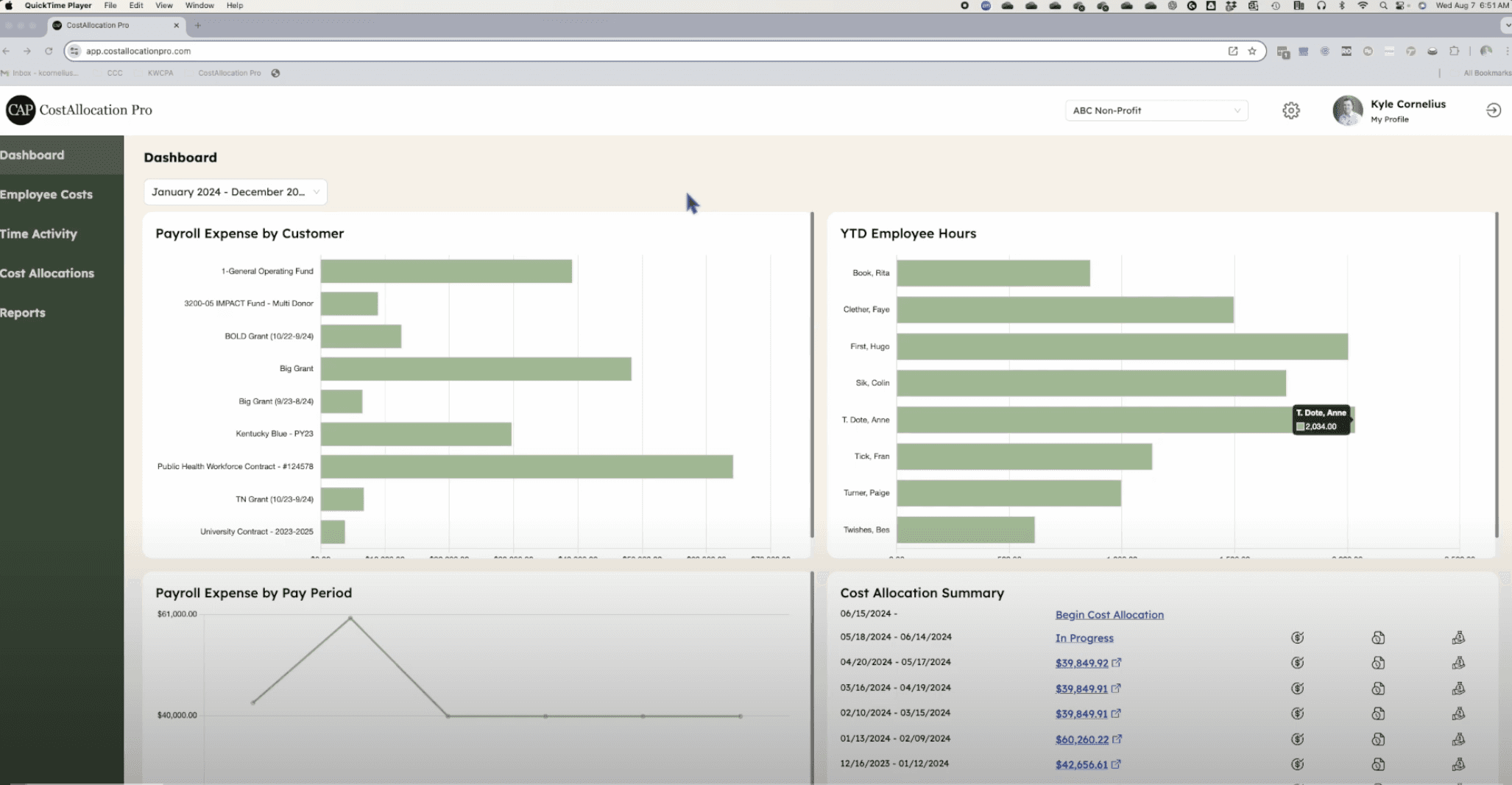
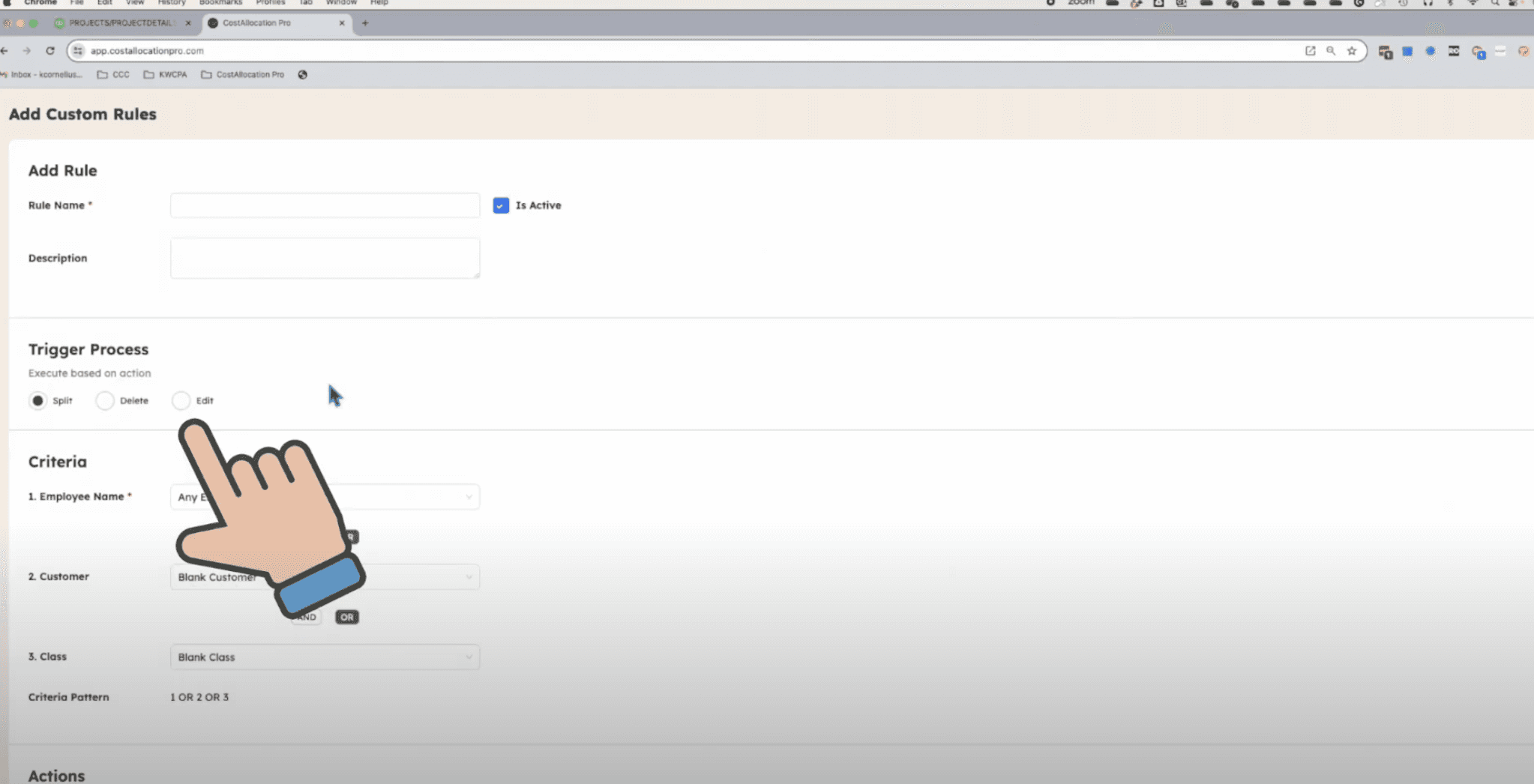
Modern cost allocation software integrates directly with accounting systems to automate these calculations. Time tracking data flows automatically into allocation calculations, eliminating manual data entry. Payroll costs are distributed based on actual hours worked, while indirect expenses follow predetermined rates and methodologies.
The real value emerges in the audit trail and documentation. Automated systems maintain detailed records of allocation methodologies, supporting calculations, and period-over-period changes. When auditors or grant monitors request documentation, the information is readily available rather than scattered across multiple spreadsheets.
Integration with QuickBooks Online allows allocated costs to post directly to the appropriate grant or program accounts, reducing manual journal entries and improving accuracy. Month-end close processes that previously took days can be completed in hours.
## Building a Sustainable Allocation Process
Successful cost allocation requires more than just selecting the right methodology—it demands consistent implementation and ongoing refinement. Start by documenting your allocation policies in writing, including the rationale for each method chosen and the specific steps for calculating allocations.
Employee time tracking forms the foundation of most allocation systems. Whether using simple timesheets or integrated time tracking software, ensure that staff members understand the importance of accurate reporting and receive regular training on proper procedures.
Regular review of allocation results helps identify potential issues before they become compliance problems. Monthly reports showing cost distribution across programs can reveal unexpected patterns that warrant investigation. Significant changes in allocation percentages may indicate shifts in program focus or potential data quality issues.
Preparing for audits becomes much simpler when allocation processes are well-documented and consistently applied. Maintain supporting documentation for allocation methodologies, including board resolutions approving indirect cost rates and evidence that methods remain appropriate as operations evolve.
Proper cost allocation transforms from a compliance burden into a valuable management tool when implemented thoughtfully. Organizations gain clearer insight into program costs, stronger audit readiness, and more efficient financial operations—all while meeting the regulatory requirements that protect their funding relationships.